
New Hanover County Directory Map
New Hanover County has no single directory that covers every resident. Government lists identify public contacts. School and campus directories narrow a name by institution. Property and deed indexes connect owners or recorded parties to parcels and instruments, while current correctional and registry searches answer tightly defined public-safety questions. Historical people directories preserve names that have dropped out of current systems.
| Directory source | People or names listed | Keeper | Way to use it |
|---|---|---|---|
| NHC county directory | Departments and county staff | New Hanover County | Free current web search |
| NC employee directory | North Carolina state staff | State of North Carolina | Free current web search |
| NHCS directory map | Schools, principals, district leaders, and staff pages | New Hanover County Schools | Browse online by school or division |
| UNCW People Search | Faculty, staff, and students subject to directory rules | UNC Wilmington | Free scoped web search |
| NHC property roll | Current owners and mailing names | Tax Administration and Land Records | Owner, address, parcel, or advanced search |
| Wilmington city directories | Past residents and businesses | DigitalNC, UNCW, and NHCPL | Digitized index or Local History Room |
Start with the keeper that fits the relationship. A department is the best route to public staff. A school page or campus directory can separate people with the same name. An owner name belongs in the property roll, not a phone list. For someone who lived in Wilmington long ago, the city directory and Local History Room are far more useful than a current contact search.
New Hanover County Government Directories
The county, state, and Wilmington directories work at different levels. The New Hanover County staff directory accepts a category plus first and last names. Results can expose a department, title, work email, telephone number, and an additional phone. North Carolina’s statewide directory searches state staff by name and agency. Wilmington offers a department directory and individual profiles rather than a verified universal employee search.
| Official directory | Exact search fields | Entry details documented |
|---|---|---|
| New Hanover County | Category; First Name; Last Name; Search | Category or department, title, email, phone, and additional phone where listed |
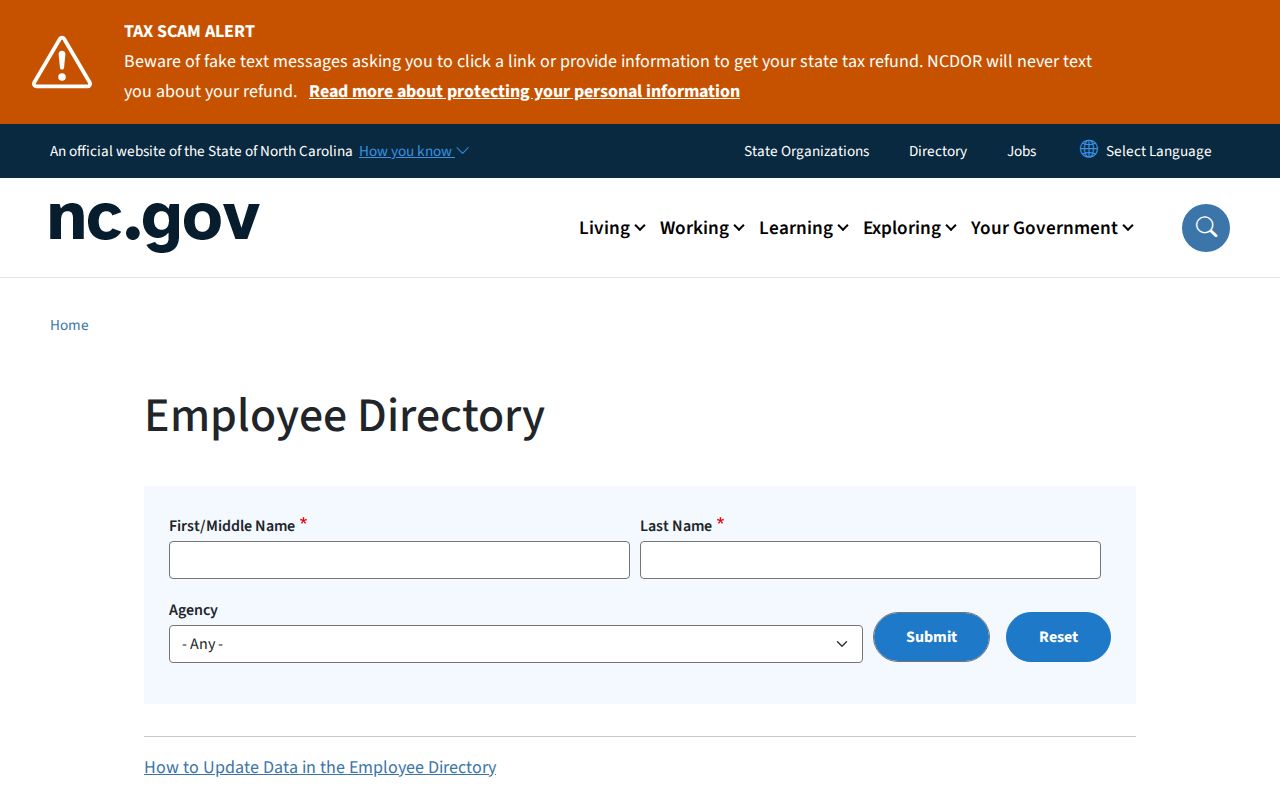
| North Carolina employee directory | First/Middle Name; Last Name; Agency; Reset | State employee contact tied to the employing agency |
| UNCW People Search | All, Staff-Faculty, or Students; First Name; Last Name; Department; Search; Reset | Profiles may add rank or title, building and room, institutional phone and email, photo, and biography |
The county search screen shows how the category and name controls divide the roster. Open the official New Hanover County directory search.
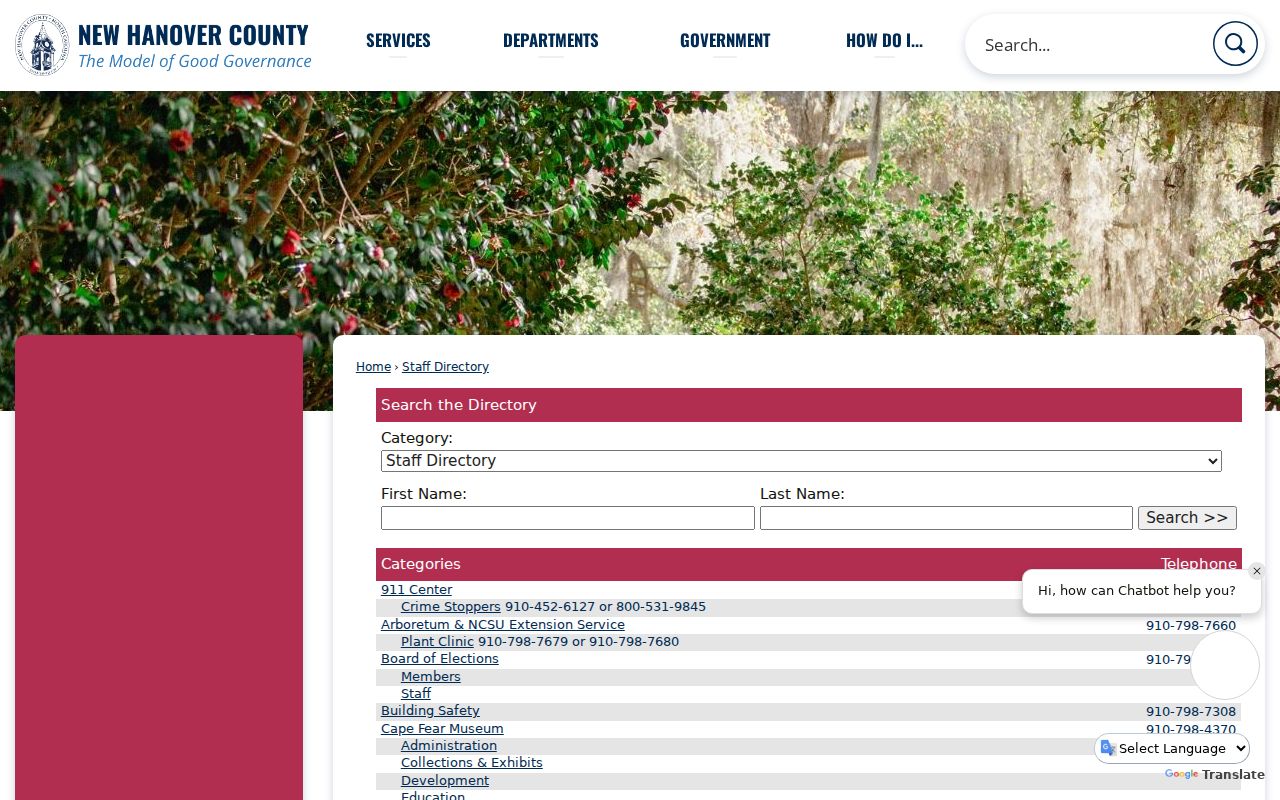
A department category can be more reliable than a name alone when spelling is uncertain. If a person does not appear, browse the agency or department page, then call the main line. Wilmington’s main help number is 910-341-7800. The City Clerk can route a request for a city file when the needed fact is not a normal directory field. A March 2026 city reorganization notice also means some department pages may lag current assignments.
Note: Directory entries are working contacts, so confirm the department before relying on a title or office assignment.
New Hanover County School Directories
The New Hanover County Schools directory map is a gateway to district divisions, school leadership, principals, and staff pages. Research did not verify one districtwide form that searches every staff member. The sound fallback is to select the school or administrative division first, scan its roster, and then use the school’s main contact if the person is not shown.
The live gateway makes that school-by-school structure clear. View the official NHCS directory gateway.
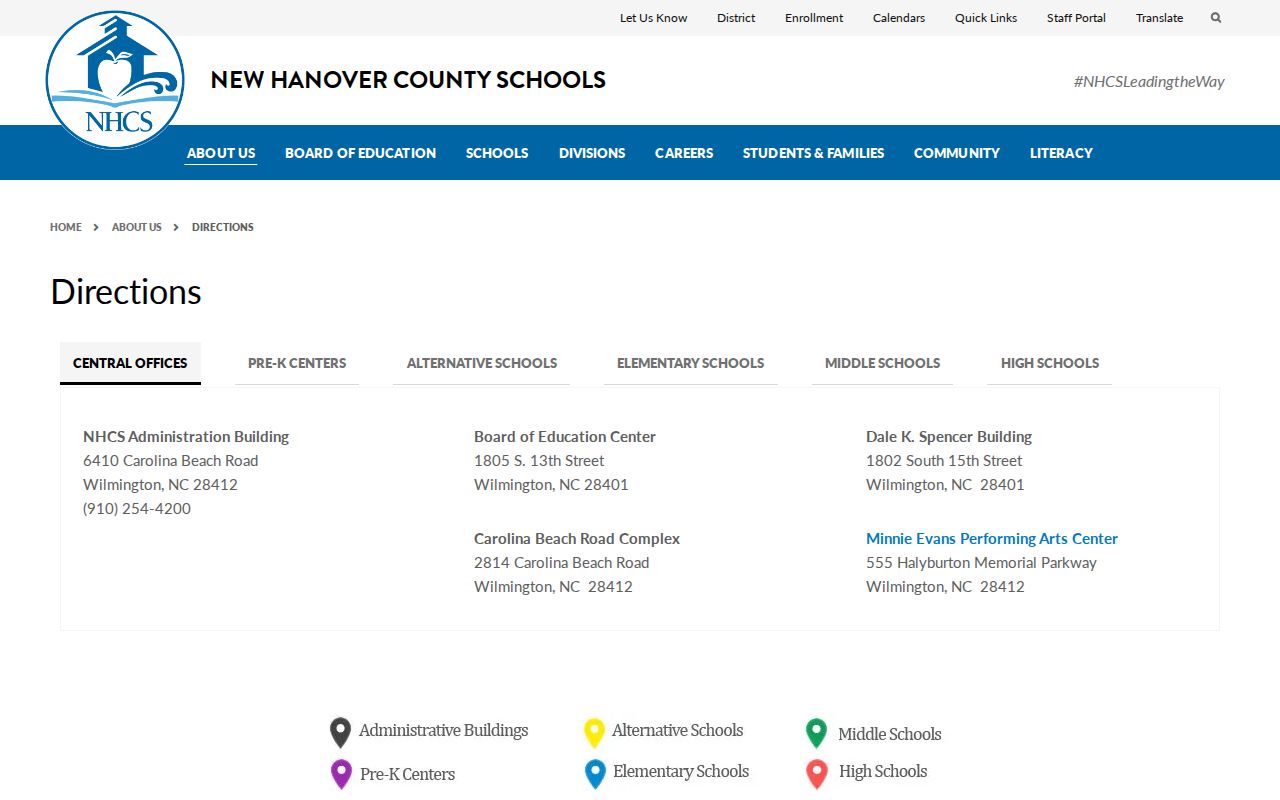
Choosing the correct campus first keeps a common surname from producing a broad, mixed result. School directories are current contact tools, not historical alumni lists. No official public alumni, congregation, neighborhood, union, civic-club, or current carrier white-pages directory was verified. Such rosters may be private or open only to members. For an older classmate, a yearbook in the Local History Room or an institutional archive is the documented New Hanover County path.
New Hanover County Campus Directories
UNCW and Cape Fear Community College provide two distinct education directory trails. UNCW People Search can limit a query to all listings, staff and faculty, or students, and it accepts first name, last name, and department. Directory rules may limit what appears for students. Department profiles can add office location, institutional phone and email, rank, a photo, or a short biography.
CFCC supports a name or keyword search and an A-to-Z browse by last initial. Its directory entry is richer than a plain phone row, which makes it useful when two people share a name.
- Display name: full name; a former surname may appear in biography text.
- Role: title, such as instructor, plus department or program.
- Place: campus connected to the profile.
- Background: biography may identify past institutions, dates, and education credentials.
- Private details: no residential address or private telephone number.
Current campus people directories establish an institutional connection. For past students or staff, switch to UNCW Digital Collections, yearbooks, oral histories, university reports, and regional manuscripts. Those sources extend the search well beyond an active profile.
Note: Save the department or campus with the name because that context can separate two similar directory entries.
New Hanover County Owner Directories
New Hanover County’s property roll acts as a directory of current owners. The Tax Department’s iasWorld system searches by Owner, Address, Parcel ID, or Advanced criteria. A profile can separate the physical property location, called the situs, from the owner’s mailing address. It also presents parcel, sales, value, land, permit, exemption, legal-description, sketch, and map areas.
The useful chain is short: address to parcel profile, parcel profile to owner, then book and page to the recorded deed. A deed identifies legal ownership, not who occupies the site. Historical directories or phone books are needed before treating an old address as proof that a person lived there. Property details may update weekly, while Land Records says ownership, boundary, and location data derived from deeds and GIS can change daily.
The Register of Deeds name index works as a directory of grantors, grantees, and other instrument parties, although the earliest web year was not verified. North Carolina voter search and weekly county files provide the public part of a registrant profile. Confidential and protected-address fields are excluded, and participation history never reveals ballot choices.
- Situs
- The physical property address.
- Mailing address
- The place where tax notices go, which may be outside New Hanover County.
- Parcel
- The mapped tax unit connected to the property profile.
- Book and page
- The location reference for a recorded instrument.
Online access includes the property search and county GIS. The Tax Data Request form covers property information not already offered as a download. In person or by phone, Tax Administration at 230 Government Center Drive, Suite 190, Wilmington, handles tax questions. Register of Deeds public stations at 230 Government Center Drive provide a stronger deed-index check when the web result may be partial. More detail on copy rules belongs with New Hanover County public records access.
New Hanover County Correctional Directories
Correctional and registry systems are narrow official directories, not general address books. The New Hanover County Sheriff detention page leads to the county inmate inquiry for custody and booking information available through that portal. The North Carolina Department of Adult Correction search uses offender names or identifying numbers to return public custody and release details. The State Bureau of Investigation registry offers name, address, location, and map search modes.
The state correctional form shows the name-based starting point. Use the official NC correctional directory.
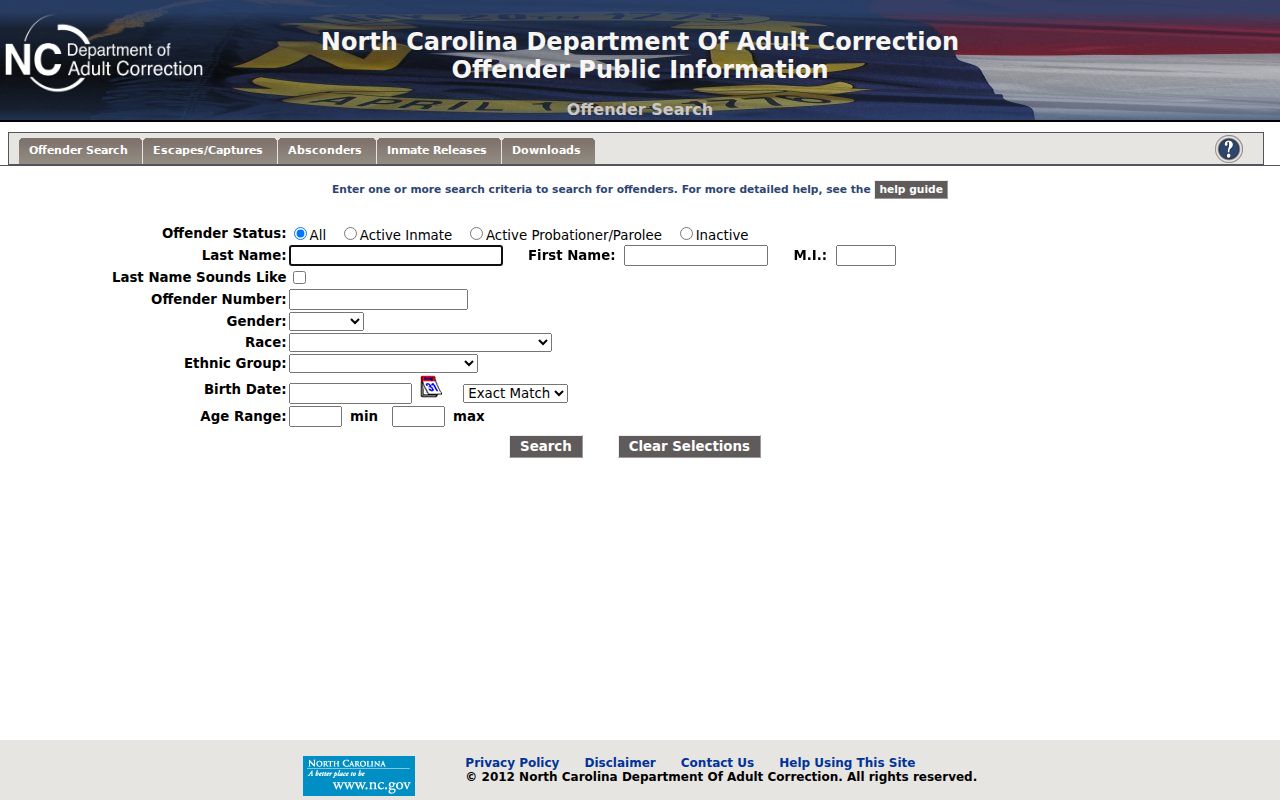
Search results should be read with the current custody or release status, not just the matching name. If the county inquiry does not expose the needed public field, begin with the Sheriff detention page or call the main line at 910-798-4200. Federal custody uses the Bureau of Prisons locator.
New Hanover County Safety Registry
The State Bureau of Investigation registry is a separate directory with name, address, location, and map search modes. Open the official North Carolina offender registry.
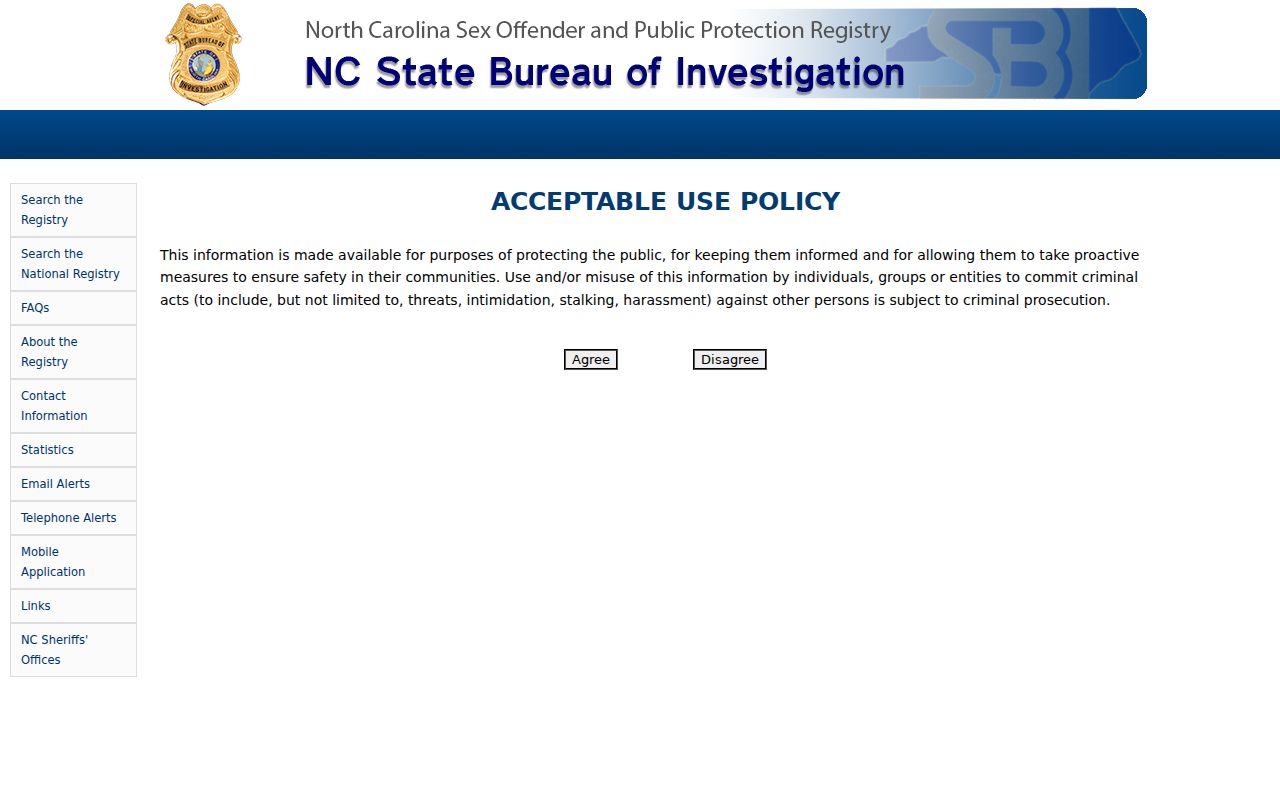
Address and map searches help distinguish a person from another registrant with a similar name.
Registry directories serve public safety and lawful personal research. They never authorize contact, threats, stalking, or harassment.
Note: A name match is not enough; compare identifiers and verify the live official entry before reaching any conclusion.
New Hanover County Business Directories
North Carolina’s Secretary of State business search is the main entity directory. It accepts organizational and individual or agent names through Search For, Search Type, Words, Organizational Name, and Last, First, and Middle fields. An entity filing can identify the business and registered agent. It does not prove a professional credential, so a board directory must be checked separately.
Assumed business names form a second directory. Statewide search covers filings from December 1, 2017 forward and includes a target, entity type, word-match choice, name fields, date range, printable view, and county filters. Older assumed-name filings remain a New Hanover County Register of Deeds search. That split matters when a long-running local shop does not appear in the statewide result.
Professional directories are kept by the board that issues each credential. Documented official lookups cover physicians and physician assistants, nurses, pharmacists, nurse aides, contractors, real-estate brokers, lawyers, cosmetic arts, educators, and insurance agents. Search fields differ by board, but names, license numbers, status, discipline, city, county, or credential type may appear where the governing system publishes them.
Note: Check both the entity filing and the credential directory because each answers a different identity question.
North Carolina Directory Beyond County
Some people connected to New Hanover County work for state agencies whose directory is not limited to Wilmington. The North Carolina employee directory accepts first or middle name, last name, and agency. An agency filter can separate common names and helps identify the right public office before making contact.
The official form displays those name and agency controls. Search the statewide employee directory.
This wider directory is the right next step when county or Wilmington lists do not contain a state employee. Keep the levels distinct. A New Hanover County listing, a Wilmington department profile, and a North Carolina agency entry come from separate keepers. If no state result appears, browse the agency’s own contact page or call its main number. Do not assume the absence of a directory row proves that the person has no connection to the agency.
Historical New Hanover County Directories
Historical people directories reach names that current staff, property, and phone systems miss. A verified digitized Wilmington index covers 1897 through 1905. It lists individuals and businesses with occupations, addresses, and race labels as printed in the original source. Those historic labels need careful source context. DigitalNC also hosts later Hill directories, but the research did not establish an exact complete year run.
| Collection | Verified span or date | What it can establish | Access channel |
|---|---|---|---|
| Wilmington city-directory index | 1897–1905 | Names, businesses, occupations, addresses, and historic race labels | Digitized through DigitalNC |
| Local History Room directories | Exact volume run not posted | Directories, annual listings, and yearbooks for the Lower Cape Fear | Noncirculating, in-room use |
| Pine Forest Cemetery register | Microfilmed in the 1980s; digitized in 2023 | Historic African American burials | NHCPL genealogy resources |
| Oakdale known-burials database | Cemetery founded 1852 | Known burials and cemetery context | Online database and local research |
The New Hanover County Public Library Local History Room at 230 Grace Street, Suite A, Wilmington, keeps noncirculating directories, yearbooks, maps, manuscripts, family papers, photographs, and annual listings. Visitors use one volume or box at a time and may bring laptops or take non-flash photographs. The room also has microfilm, book, photo, print, copy, and scan equipment. Call 910-798-6305 first because maps and large collections can take 24 to 48 hours to retrieve.
Note: Ask for a volume inventory before visiting because the exact city and reverse-directory runs are not posted online.
New Hanover County Cemetery Directories
A past Wilmington resident can often be reconstructed through independent directories. Begin with the 1897–1905 Wilmington directory index, carry the address into the Bill Reaves “Block Books,” then check newspaper microfilm, a census household, a deed, and a cemetery register. The Block Books arrange clippings by street address rather than surname and can contain sales, permits, obituaries, marriages, advertisements, and street news. This method fits New Hanover County’s history. The Local History collection follows the county boundary as it existed when each record was created. A person may seem to leave the county when a boundary shift placed the same land in Pender or Brunswick. Old Wilmington addresses also make more sense when read against the Cape Fear River and Market Street numbering baselines.
Cemetery and African American genealogy directories add identities that other record sets obscured. NHCPL genealogy resources connect the Pine Forest register, Oakdale database, Lower Cape Fear Historical Society holdings, and New Hanover slave-deed transcriptions made by CFCC students. The transcription work surfaces names embedded in property books under slavery. Bill Reaves family files should be searched in both the African American and general collections, with spelling variants checked in each.
No exact public inventory confirms every reverse directory, phone book, church register, or funeral-home series held locally. Ask the Local History Room for a catalog check instead of assuming a volume exists. The State Archives newspaper guide and New Hanover miscellaneous records from 1756 through 1945 are further mail, research-room, and catalog fallbacks when local people directories stop.