
Finding People Across New Hanover County
A sound search begins with the fact already known. A full name can go into the deed, court, voter, business, staff, or correctional systems. A street address works better in the property and GIS tools. An old Wilmington address can lead to a city directory, a Block Book, a newspaper item, and then a deed. Each source answers a different question, so one result should guide the next search instead of ending it.
New Hanover County has no single government database that combines every record. Wilmington also has city files, while Carolina Beach, Kure Beach, and Wrightsville Beach keep some municipal records of their own. County courts, deeds, voter files, and tax rolls still reach across all those places.
- Search the county property roll or deed index when a name or address points to land.
- Check the North Carolina court Portal for public cases tied to the same name.
- Use the state voter lookup only for the public registration facts it is designed to show.
- Move to the Local History Room when the trail predates the online systems.
- Ask the actual custodian for a focused record when a web search stops short.
The state voter tool is useful for a narrow identity check because it combines public registration status, districts, polling information, and participation history. It never shows ballot choices. Protected identifiers and some residence addresses remain confidential. The complete field-by-field treatment belongs with New Hanover County voter registration records, while the home workflow uses that source only as one check among several independent records.
Note: Save parcel IDs, case numbers, book and page references, and name variants because they make the next official search much more precise.
New Hanover County Records Desks
The keeper matters as much as the record. The Register of Deeds holds land instruments, plats, assumed names, marriage licenses, and county birth, death, and marriage certificates. The Clerk of Superior Court holds civil, criminal, traffic, divorce, estate, will, and special-proceeding files. Wilmington's City Clerk keeps council proceedings and other city files. The county's general request portal specifically routes many of these common searches back to the specialist office.
The detailed rules for fees, inspection, and written requests belong with each custodian. New Hanover County public-record access starts by identifying that office rather than sending every inquiry through the general county portal.
Search New Hanover County Deed Names
The Register's grantor and grantee index connects names to deeds, mortgages, liens, plats, and other recorded instruments. A grantor gives or transfers an interest. A grantee receives one. Search every reasonable spelling form, including initials, former names, and business-name variations. The county warns that web index details may not reflect every update and do not replace the actual instrument or office computers.
The Register of Deeds search landing page shows that warning before sending a user into the vendor index.
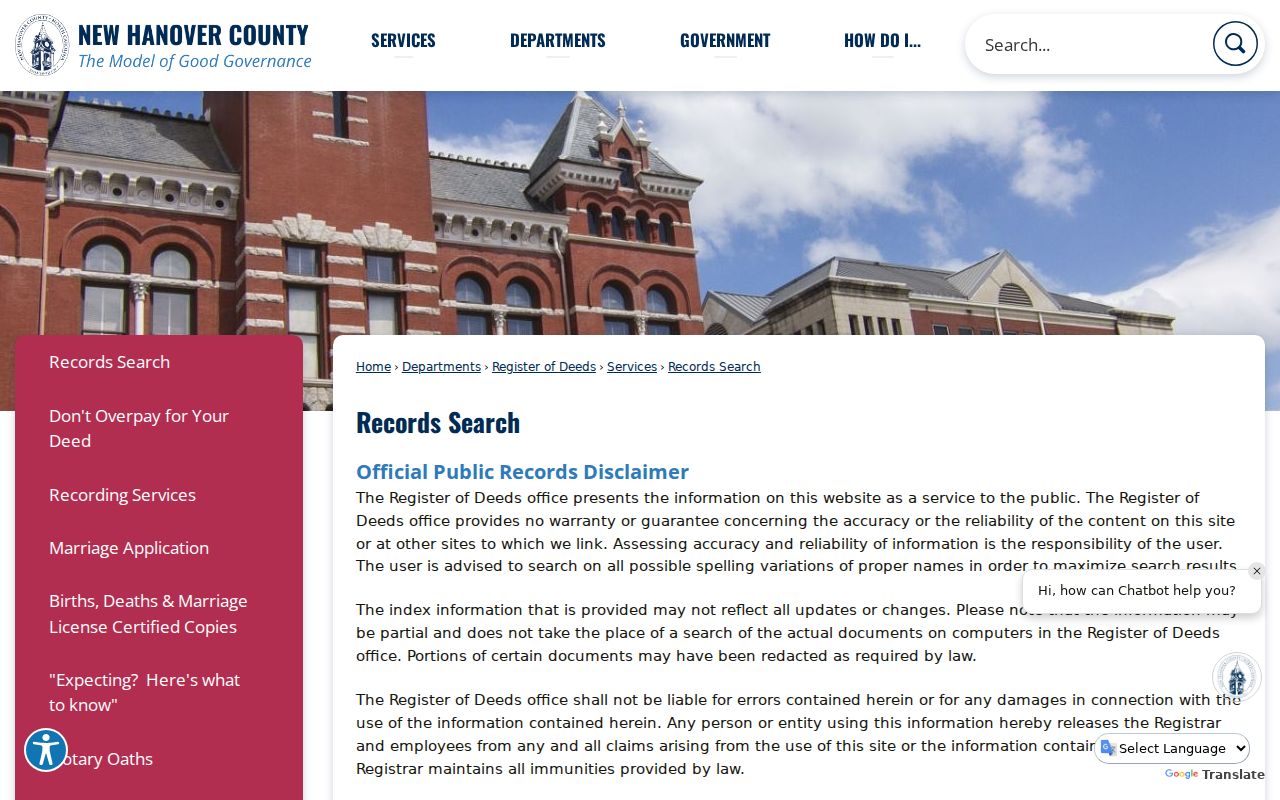
That notice is a practical search instruction. Keep the book, page, and document number from a result, inspect the image, and use the public stations when the online name index seems incomplete.
- Grantor
- The person or entity transferring an interest.
- Grantee
- The person or entity receiving an interest.
- Index
- A finding aid that points to the recorded document.
- Instrument
- The deed, lien, plat, or other document filed with the Register.
A free Property Fraud Alert can watch for new documents indexed under a registered name. An alert is only a prompt to inspect the instrument, especially when several people share that name. It does not prove fraud or replace a title review. The county also warns against private deed-copy letters asking $86 when the official online image is free and ordinary counter copies cost far less.
New Hanover County Property Search Trail
An address search and an owner search meet in the iasWorld property profile. The county system accepts Owner, Address, Parcel ID, or Advanced criteria. Results can separate the site's physical address from the owner's mailing address, then expose the parcel number, sale history, values, land details, legal description, permits, exemptions, sketch, and parcel map. Ownership and property characteristics update on a different cycle from deed-derived land data, so the date checked should be saved.
| Search choice | Best starting fact | Useful next result |
|---|---|---|
| Owner | Surname or entity name | Parcel and mailing address |
| Address | Physical street location | Current listed owner |
| Parcel ID | Exact county identifier | Full property profile |
| Advanced | Several known facts | Narrowed property set |
The official New Hanover County real-property search displays the working interface.
A deed establishes ownership, not who lived at the site. For an occupant, add a current staff or voter record where lawful, or an older city directory and newspaper trail.
New Hanover County Address Search
A postal line that says Wilmington does not prove the parcel lies inside Wilmington city limits. Unincorporated New Hanover County and the three beach towns have their own addressing authority, while county records cover the wider jurisdiction. This matters when looking for a code case, permit, or municipal file. Check the city-limit or municipality layer before choosing the office.
Old street research has another local feature. Cape Fear River and Market Street form the Wilmington numbering baselines. Route and local names can coexist, such as US 17 and Market Street. Searching both forms may recover a deed, directory entry, or news item that a one-name query misses. County address changes can reach USPS before private map services, another reason to favor the official parcel map.
Search New Hanover County Court Names
New Hanover County cases run through North Carolina District and Superior Courts in Judicial District 6. Wilmington has no separate municipal court. The statewide Portal offers anonymous public Smart Search by case number or by a party, business, or nickname. Filters can include location, date of birth, case type, status, and filing dates. A result may show parties, events, hearings, dispositions, judgments, and the register of actions.
The North Carolina court Portal is the remote starting point.
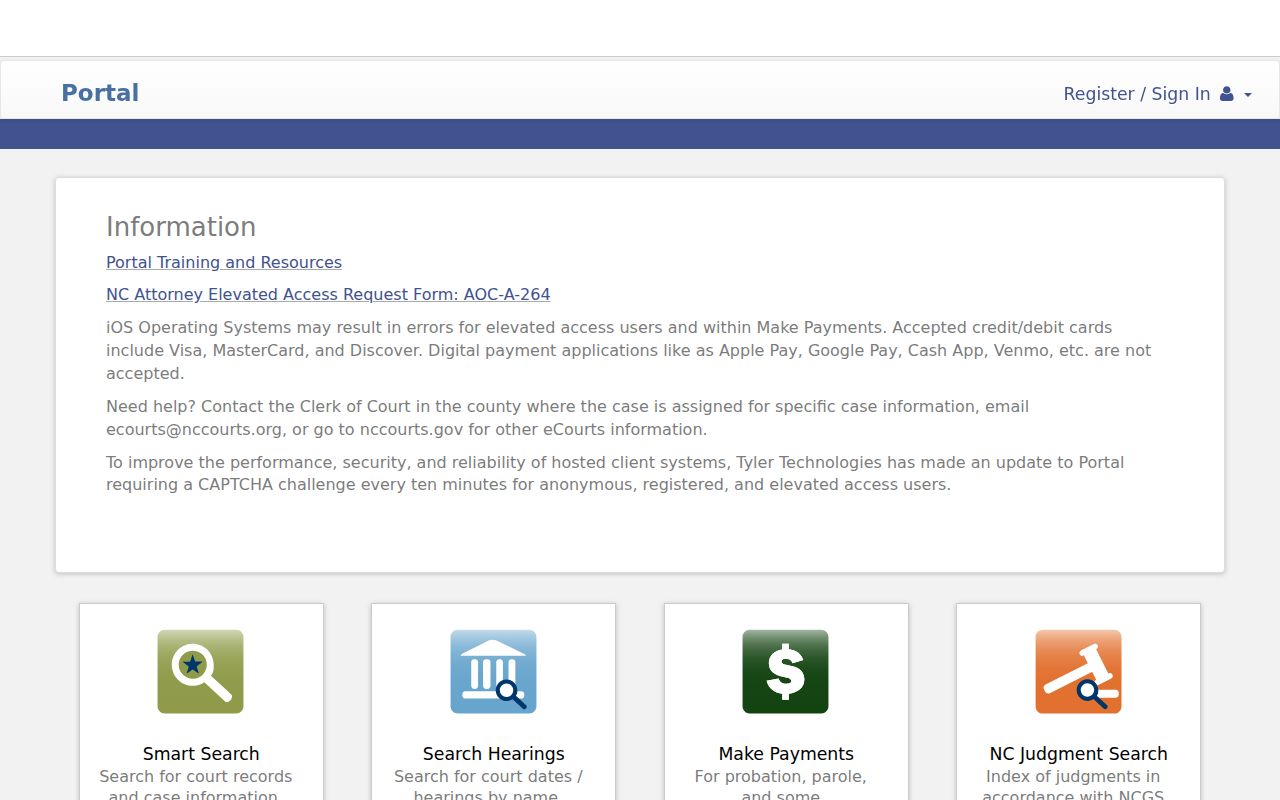
Courthouse public terminals are the stronger fallback. Official guidance says a criminal terminal can search by defendant, case number, victim, or witness. The Clerk supplies the file or certified copy. Sealed, expunged, juvenile, adoption, and other confidential material does not become public merely because the Portal exists. Federal cases use PACER and the Eastern District of North Carolina instead.
Note: A docket is the court's event list, while a certified copy comes from the clerk and carries official authentication.
New Hanover County Vital Record Paths
Birth, death, and marriage certificates for county events can be ordered from the Register of Deeds at either county office, online, or by mail. A local certified copy costs $10. A mail request adds $1 postage and requires the completed relationship fields, valid identification, and any proof needed for eligibility. Divorce decrees and full case files belong to the Clerk of Superior Court, while NC Vital Records keeps statewide divorce facts and certificates.
North Carolina does not use a simple rule that opens every ordinary certificate after a set number of years. N.C.G.S. §130A-93 controls certified-copy eligibility and protects specified birth, adoption, health, and identity data. The state channel charges $24 for a three-year search and first certificate, then $15 for another copy of the same certificate. Historical series may be available through archives, but their exact coverage must be checked rather than assumed.
Note: An uncertified index fact and a certified certificate are different products with different access rules, proof requirements, and evidentiary value.
New Hanover County Heir Records
An heir search often crosses offices. Start with the Clerk's estate division for a will, estate file, or special proceeding. Match the decedent to a death certificate or index fact, then follow deeds for land that passed through the estate. Court notices and newspapers can name relatives or representatives. A parcel legal description can keep the chain tied to the same land when family members share names.
Older New Hanover County research benefits from the State Archives. Its miscellaneous county records span 1756 through 1945 and include bankruptcy papers, bills of sale, appointments, pardons, hospital reports, and oyster-bed applications. The official State Archives research gateway points toward the catalog and county series.
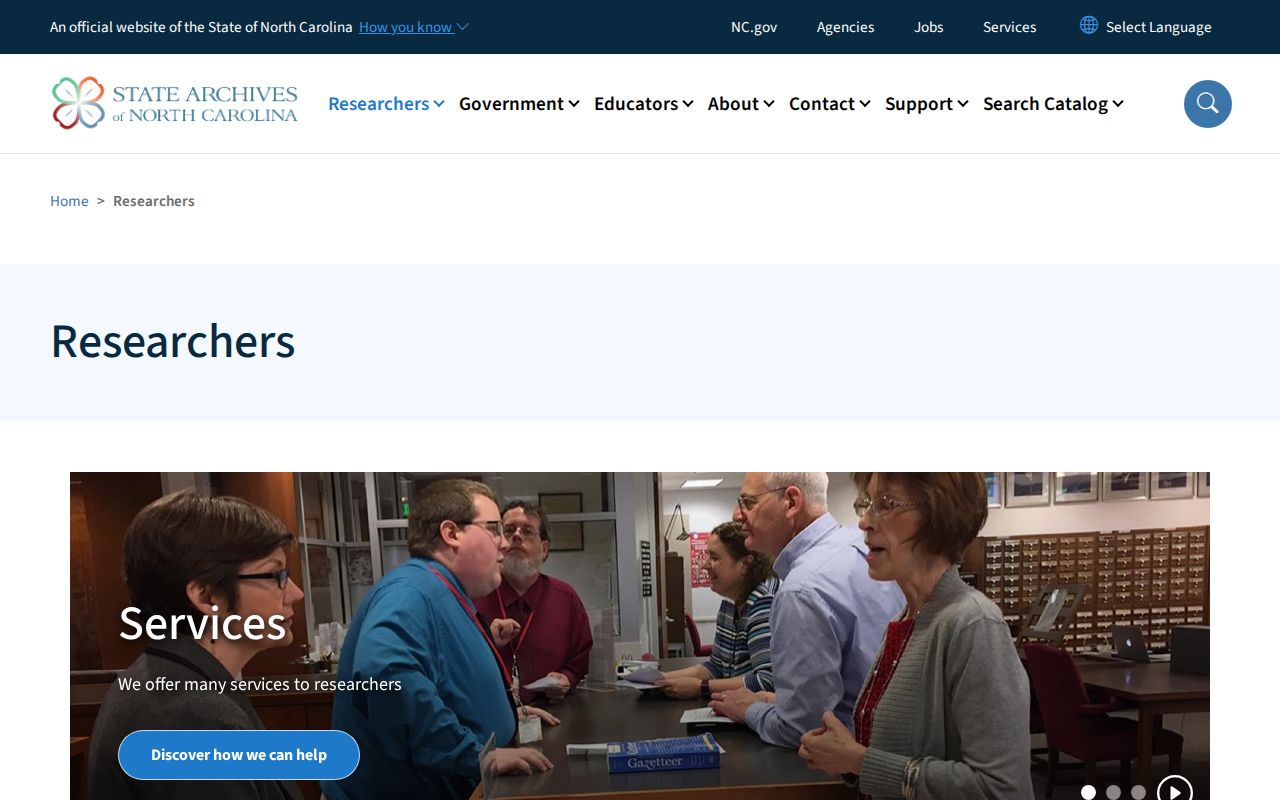
Early county boundaries were larger than today's map. A family may appear to move into Pender or Brunswick records when the land stayed still and the boundary changed.
New Hanover County Directory Reconnection
Directories supply context that deeds and tax records cannot. Current county, city, school, state, UNCW, and Cape Fear Community College directories may link a public role to a work phone or email. Historical Wilmington directories can supply an occupation and home address. The 1897 through 1905 index also preserves race labels printed in the source, which should be treated as historical context and checked against other records.
The Local History Room holds directories, annual lists, yearbooks, family papers, photographs, maps, and Lower Cape Fear material. The collection and visitor rules explain its noncirculating use.
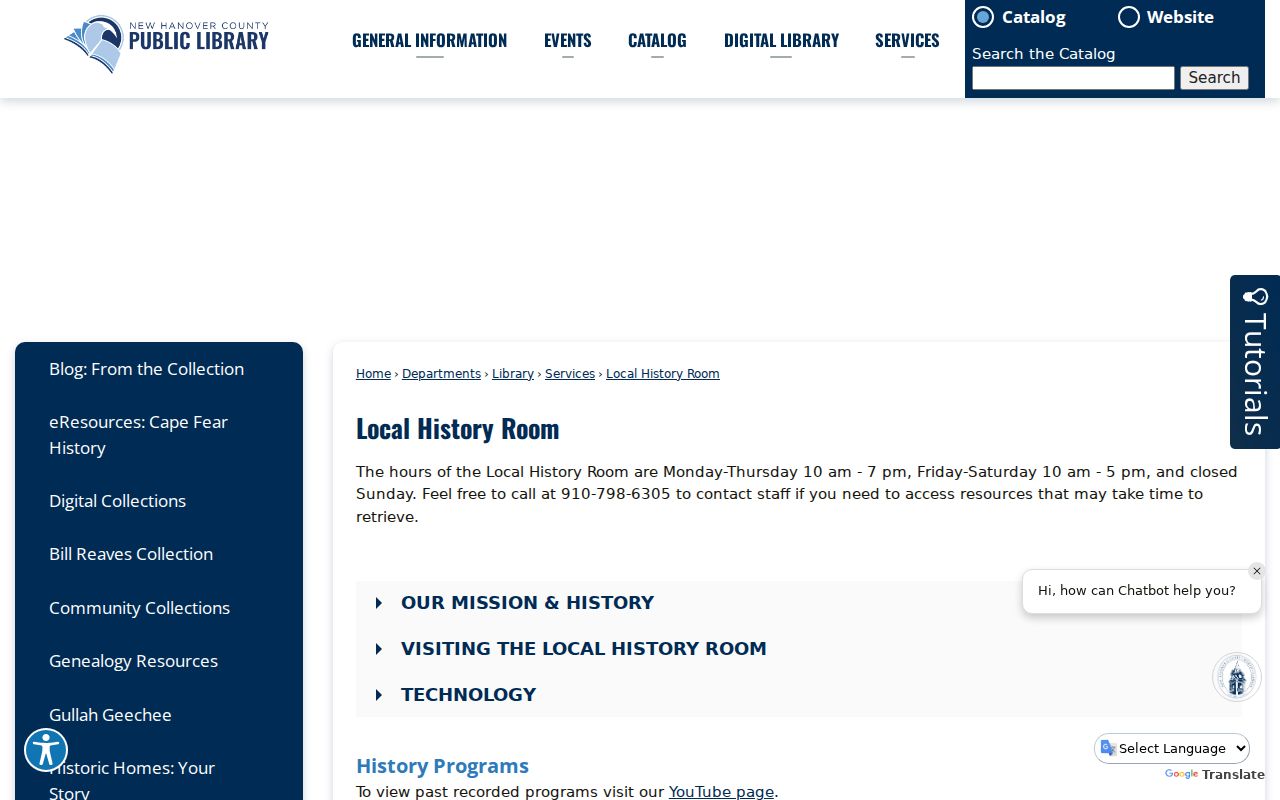
Call ahead when a map or large collection must be retrieved. The room notes that some pulls can take 24 to 48 hours. A fuller inventory of New Hanover County people directories separates current contact tools from historical sources.
Search New Hanover County Archives
The Bill Reaves Collection provides an unusually local route from a person to a place. Its first series has more than 900 typed family files in bound volumes. A second series contains more than 6,800 surname files. The Reaves Block Books reverse the usual search by arranging newspaper clippings around street addresses. They can connect a property to sales, permits, obituaries, marriages, advertisements, and street news.
For a resident from the late nineteenth or early twentieth century, begin with the Wilmington directory index. Use its address to request the Block Book material, then verify the person in newspaper microfilm, census households, deeds, probate, or cemetery sources. New Hanover County library genealogy resources also include the Pine Forest Cemetery register, Oakdale burial material, and a slave-deed transcription produced by Cape Fear Community College students. That transcription helps restore names embedded in property books created under slavery.
The newspaper trail is broad. State Archives holdings include Wilmington titles from the colonial era through the twentieth century, with runs of the Cape-Fear papers, Wilmington Journal, Wilmington Messenger, and Wilmington Morning Star. Obituaries, marriage notices, business ads, and social items can separate two residents who share a name. Public federal census schedules through 1950 add households, neighbors, birthplaces, work, and street details. The 1960 census remains closed until its scheduled release in 2032, so later research must lean more heavily on directories, deeds, newspapers, school sources, and family files.
UNCW Digital Collections adds diaries, letters, oral histories, photographs, newspapers, and regional manuscripts. These sources can confirm a campus, civic, maritime, or family connection that a short index entry leaves unclear.
New Hanover Custody Record Search
Custody records are split by level. The New Hanover County Sheriff's detention page links to the county inmate inquiry. The NC Department of Adult Correction covers state custody, the federal Bureau of Prisons covers federal custody, and the State Bureau of Investigation operates the sex offender registry. A missing result in one system says nothing about the others.
These records can help distinguish people with similar names or support a lawful safety check. Public entries may show custody, booking, charge, release, or registration facts as the specific portal permits. Incident reports and 911 records use records-unit or Chapter 132 request channels. Active investigations and protected victim or juvenile details can be withheld. Registry and custody information never authorizes unwanted contact, threats, or harassment.
New Hanover County Business Search
A business trail can identify an entity and the people named in its filings. North Carolina's Secretary of State search accepts an organizational name or an individual's last, first, and middle names. Assumed-name filings made from December 1, 2017 forward can be searched statewide. Older assumed names remain a New Hanover County Register of Deeds search. A registered agent address is a filing contact, not proof of residence.
Professional credentials require a separate board search. Medical, nursing, legal, contractor, real-estate, cosmetic arts, educator, insurance, and other boards publish their own fields and status terms. Compare a board result with the Secretary of State entity and official property records when verifying a seller, contractor, or business identity. Do not treat an entity filing as a substitute for a license record.
The search channel matters here too. Interactive Secretary of State use is free, but automated searching is prohibited. Certified copies of older assumed-name filings come from the Register that received them. A current entity page, a board credential, and a county deed can therefore describe three distinct legal ties to the same name.
New Hanover County Unclaimed Property Search
The state unclaimed-property search offers another lawful name trail. It can reveal property held for an owner when an old check, account, refund, or other asset did not reach that person. Because common names can produce many hits, match the city or other public details before starting a claim. The claim procedure is separate from finding a listing.
The official NC Cash name search is free.
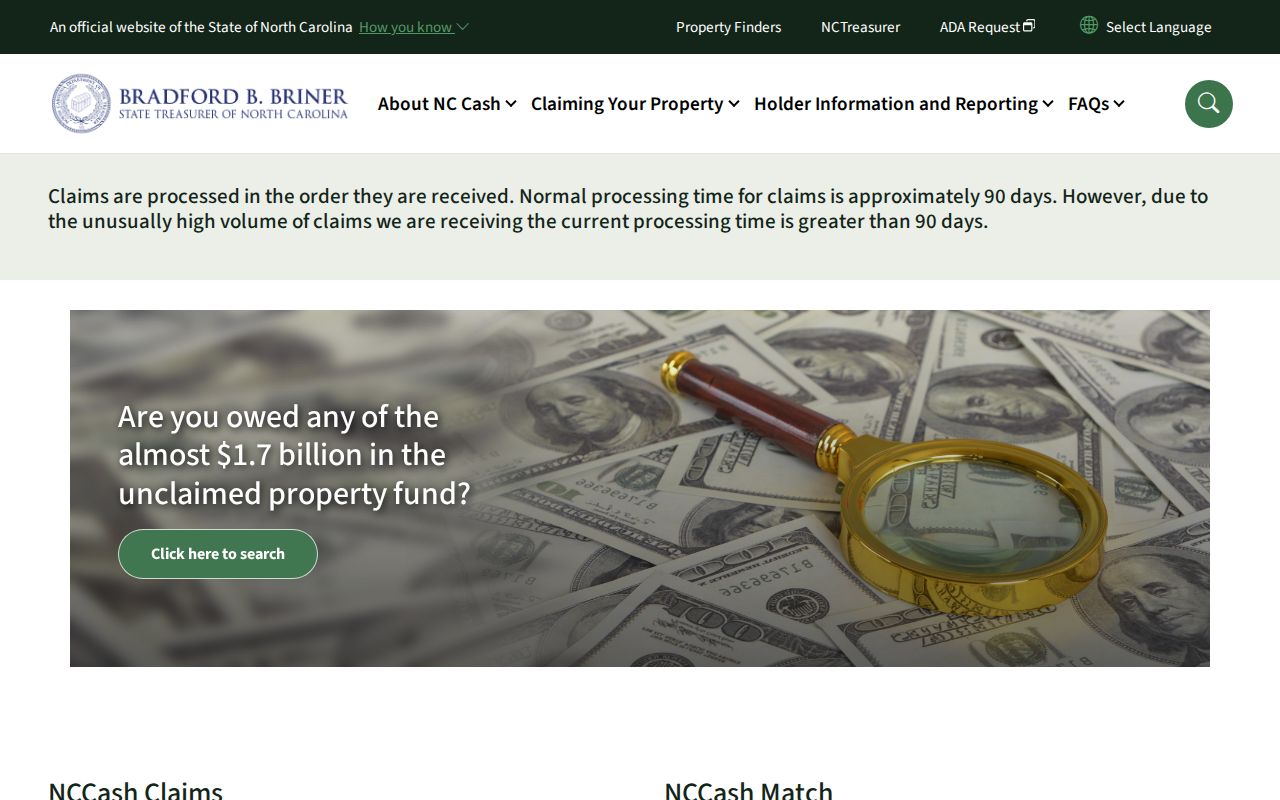
This source is best used to reconnect property with its apparent owner, not to infer a current address or relationship that the listing does not establish.
Protect a New Hanover Address
North Carolina's Address Confidentiality Program gives qualifying relocated victims of domestic violence, a sexual offense, stalking, or human trafficking a substitute address. Chapter 15C generally keeps the actual address and phone held by agencies from public disclosure. Election officials retain the real address confidentially, while the Register cannot replace an address within land instruments and their indexing.
Recorded documents have a separate remedy. A person can identify a book and page or document number and ask the Register to redact a Social Security number, specified identification number, financial-account number, PIN, or password under N.C.G.S. §132-1.10. The county posts mail, fax, electronic, and hand-delivery routes for that request.